

Buy or Rent After a PCS? How Military Families Can Decide (Part 2)

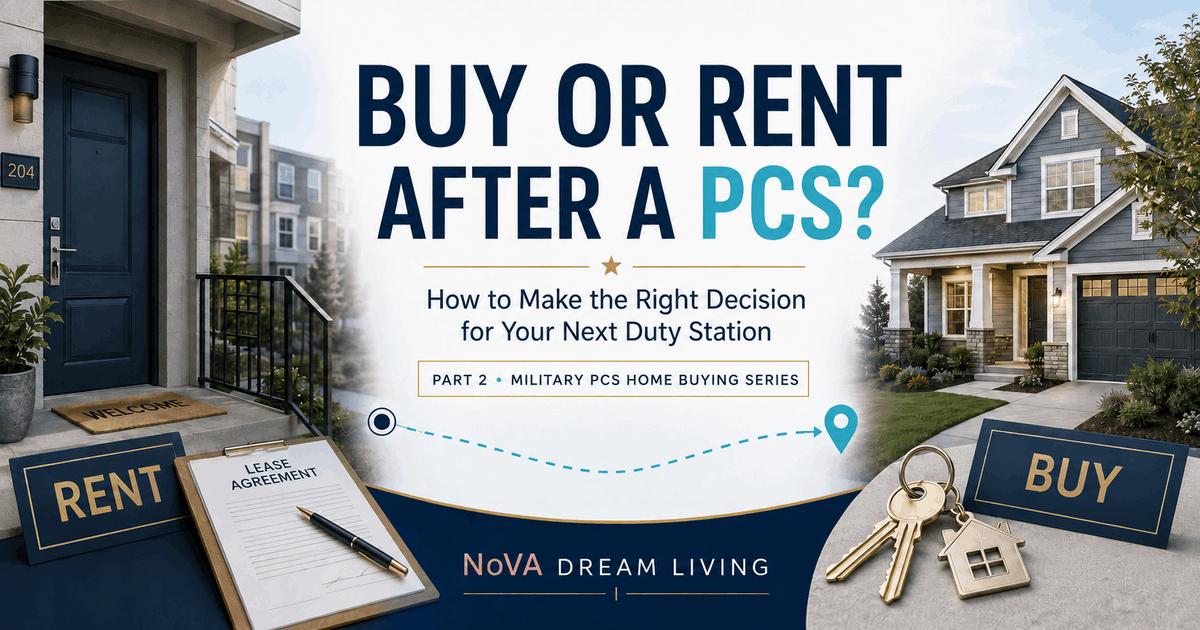
PCS orders can turn a major financial decision into an urgent one. You may have only a few weeks to compare neighborhoods, schools, commutes and housing costs—often from another state or country.
In that environment, buying can feel like progress. Renting can feel temporary. Neither feeling tells you which choice is financially or practically right for your family.
Here is the honest answer: buying is not automatically the better investment, and renting is not throwing money away. Each option solves a different problem.
Buying may offer stability, control and the opportunity to build equity. Renting may preserve cash, limit repair risk and give you more freedom if plans change.
As a USAF veteran, MRP-certified REALTOR® and National Co-Chair of Epique Realty’s Military Network, I believe the best PCS housing decision is the one that still works when military life does not follow the original plan.
If you have not read the series introduction, start with Part 1: Military PCS Home Buying—Should You Buy or Rent After a PCS?. Then use the questions below to decide whether you should buy now, rent first or preserve your flexibility.
When Buying After a PCS May Make Sense
Buying deserves serious consideration when several factors—not just one—line up.
You reasonably expect to stay long enough
Buying and later selling both involve transaction costs. The Consumer Financial Protection Bureau warns that buying can be risky and expensive if you may need to move again within a few years.
There is no universal number of years every military family must own. Test your likely time on station against the actual costs of buying, owning and eventually selling that home.
We will walk through that calculation in Part 3: The PCS Break-Even Point.
You will still have meaningful cash reserves after closing
A VA-backed loan may allow an eligible borrower to purchase without a down payment, but “zero down” does not mean “zero cash needed.” Buyers may still have closing costs, prepaid taxes and insurance, moving expenses, utility deposits and immediate home needs.
The CFPB notes that closing costs typically range from 2% to 5% of the purchase price, excluding the down payment, although actual amounts vary. It also advises reserving money for repairs, moving and utility setup. See its guidance on down payments and reserves.
If buying leaves you one HVAC failure, vehicle repair or delayed reimbursement away from credit-card debt, the home may be affordable to close—but not affordable to own.
The complete monthly cost fits comfortably
Do not compare rent with principal and interest alone. A realistic ownership budget may include:
-
Principal and interest
-
Property taxes
-
Homeowners insurance
-
HOA or condominium fees
-
Utilities
-
Routine maintenance
-
Major repairs and replacements
-
Commuting, tolls and parking
BAH can inform your budget, but it is not a target you must spend. A lender’s approval amount is also a ceiling, not a recommendation.
You have a credible exit plan
Before buying, ask what happens if orders arrive sooner than expected.
Could you sell without depending on aggressive appreciation? Would the property appeal to future buyers? If you might rent it, have you researched realistic rent, vacancy, management, maintenance, insurance and association restrictions?
“We can always rent it” is an idea. It becomes a plan only after the numbers and rules support it.
When Renting May Be the Smarter Choice
Renting is often the more disciplined decision when flexibility matters more than ownership.
Your assignment or separation timeline is uncertain
If deployment, reassignment, retirement, separation or a family change could move you again soon, renting can reduce the pressure of an early sale. Military OneSource identifies lower upfront and maintenance costs, greater flexibility and less exposure to declining values as potential advantages.
That flexibility has real value. It is not money wasted.
You do not know the area well enough yet
A neighborhood can look ideal online and still be wrong for your daily life. This is especially true in Northern Virginia, where a short distance on a map can become a difficult commute depending on installation access, bridge crossings, toll roads and duty hours.
Schools, medical care, spouse employment, childcare and support networks also matter. A short-term rental can give you time to learn the area.
Buying would drain your savings
Homeownership transfers repair and property-value risk from the landlord to you. If you need every dollar available to close—or if the budget assumes no major repairs—renting may protect your financial readiness while you continue saving.
Comparable rent is materially lower than the full cost of owning
Buying can still be worthwhile when its monthly cost is higher, but acknowledge the difference. If renting lets you preserve reserves, reduce debt or prepare for a later purchase, it may better support the long-term goal.
Three Reasonable PCS Housing Decisions
This does not have to be a simple yes-or-no decision.
Option 1: Buy now
This may fit when your timeline is reasonably stable, reserves are solid, the total payment is comfortable and the home has a workable exit.
Option 2: Rent first, then reassess
This can be smart when you want to buy but need local knowledge. A six- or twelve-month rental may clarify commutes, communities and your family routine. Prices and rates can change while you wait, so use the rental as an intentional research period.
Option 3: Remain flexible for this assignment
Renting for the entire tour may be appropriate when the assignment is short, plans are uncertain, reserves need rebuilding or owning would add stress.
You do not need to buy at every duty station to be making financial progress.
A Quick Buy-or-Rent Reality Check
Before touring homes, answer these questions together:
-
How long do we realistically expect to remain in the area?
-
What could shorten that timeline?
-
How much cash will remain after closing and moving?
-
What is the full monthly cost—not just the mortgage?
-
Does the location work for duty, school, childcare and spouse employment?
-
What would we do if we received orders in 12 to 24 months?
-
Are we comfortable owning through a flat or declining market?
-
Are we choosing a home because it fits the plan—or because PCS pressure makes us feel behind?
If buying works only when you stay longer than expected, avoid major repairs and sell into a stronger market, the plan is too fragile.
The Bottom Line
Buying may be a strong choice when it supports your finances, family and likely timeline—and you can absorb a change in plans.
Renting may be smarter when your assignment is uncertain, reserves would be depleted or you need time to learn the area. It is often better to rent intentionally than to buy urgently.
If you are PCSing to Northern Virginia and want an honest second set of eyes on the decision, I am happy to help you compare the numbers, commute and exit options. A useful real estate conversation should help you decide whether to buy—not assume that you will.
Next in the series: Part 3: The PCS Break-Even Point—Will You Own the Home Long Enough?
Frequently Asked Questions
Is renting after a PCS just throwing money away?
No. Rent pays for housing, flexibility and transferring most repair and property-value risk to the owner. Whether renting or buying creates the better financial outcome depends on the total costs, ownership period and what happens when you move.
Should I rent first when moving to Northern Virginia?
Renting first can be useful if you do not yet understand local commutes, installation access, schools or neighborhood differences. It is not necessary for every family, but it can reduce the risk of making a rushed location decision from a distance.
Does receiving BAH mean I should buy?
No. BAH helps cover housing costs, but it does not determine whether a particular home is a good purchase. Base your decision on the complete ownership cost, your reserves, expected time in the area and exit plan.
Should I buy if the mortgage payment is lower than rent?
Not based on that comparison alone. Add taxes, insurance, association fees, maintenance, repairs, purchase costs and future selling expenses. A lower principal-and-interest payment does not necessarily mean a lower total cost.
Elizabeth Essex
REALTOR®
EVE Dream Living - NoVA
📱 704.965.3550
Categories
Recent Posts







GET MORE INFORMATION

Agent | License ID: 0225274443
11815 Fountain Way Ste 300, Newport News, VA 23606-4448, USA